A fall in the warehouse: what the team needs first
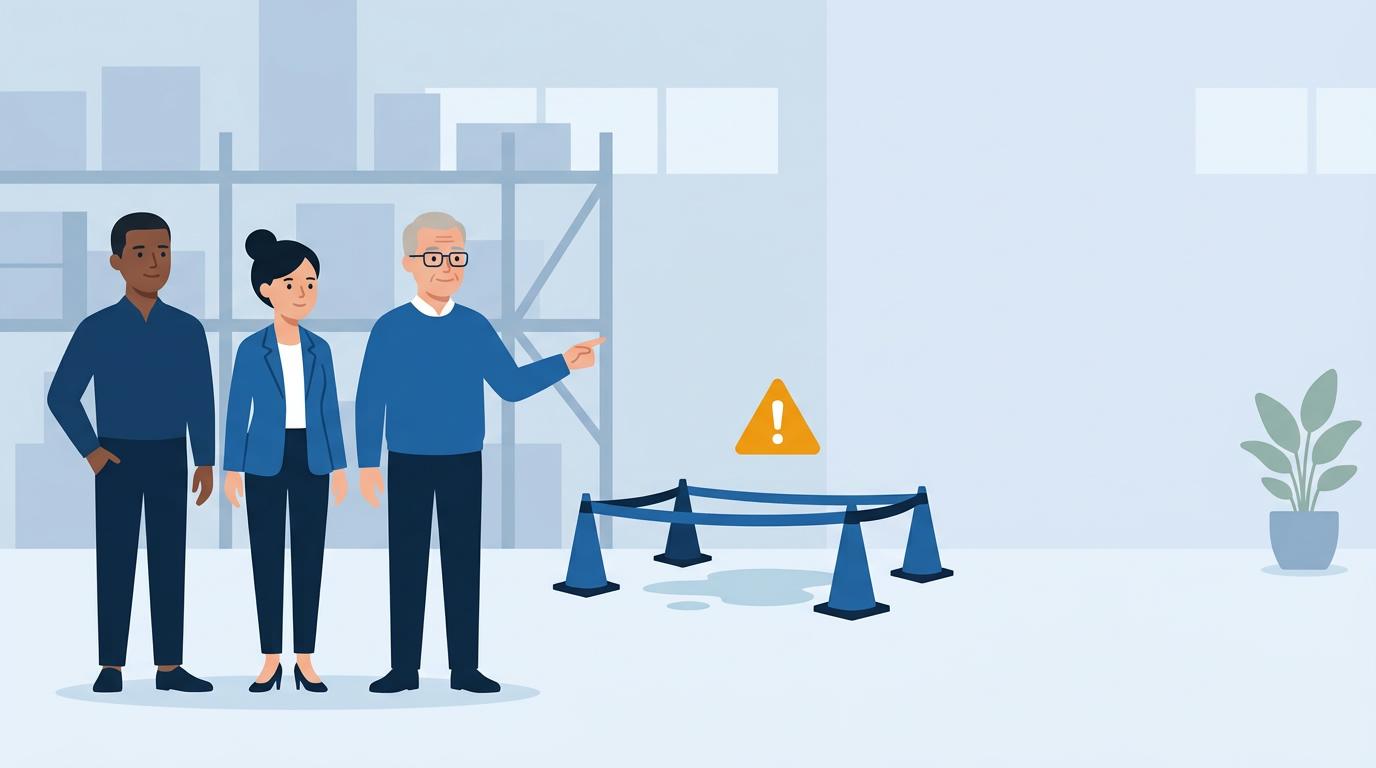
Mara, a shift supervisor in a fictional warehouse, learns that an employee slipped on a wet patch in a passageway. Colleagues provide first aid and call emergency services if needed. The area is secured. Only then does the team consider what other shifts can learn. Safety instruction after a workplace accident must neither delay care nor replace the incident investigation.
Mara initially records only what is known: the location, task and observed conditions. Whether a leaking installation caused the moisture remains unknown. She does not present assumptions as facts or disclose the injured person's name or medical details to the team. Responsible staff assess the incident and any required notifications separately from the training record.
Instruction after an accident: distinguish legal duties from the trigger
Section 12 of Germany's Occupational Safety and Health Act requires adequate, appropriate, workplace-specific instruction during working hours. Instruction must be adapted to evolving risks and repeated as necessary. An accident therefore warrants a case-specific review. The provision alone does not mean that every accident automatically requires the same additional session. The actual hazards and changes at the workplace determine what is needed.
In addition, section 4 of DGUV Regulation 1 requires instruction within its scope to be repeated as necessary, carried out at least annually and documented. Our guide to instruction intervals explains recurring planning; a current incident may call for earlier action but does not replace the regular schedule.
Move from the incident to a verified safeguard
Mara inspects the area with the occupational safety specialist and involves the team. Together they check whether water is still entering, how the route is used and which safeguards are present. Under section 5 of the Occupational Safety and Health Act, the employer assesses work-related hazards. If a pipe is leaking, telling people to walk carefully is insufficient: repair, secure barriers and an appropriate alternative route must be organised.
Mara distinguishes immediate controls, permanent correction and communication. She assigns an owner and review date to each measure. Before reopening, the team checks whether the hazard has actually been removed and the route is safe. While the cause remains unknown, it stays explicitly marked as unresolved. Pressure to resume work must not substitute for a checked release.
A six-field learning worksheet
Mara uses a short learning worksheet for shift handovers. It contains only information needed for safe action; identifiable accident and health information does not belong in a generally accessible training slide. The worksheet can be kept on paper or digitally.
- Situation: location, task and verified observation.
- Hazard: what could happen and what remains unknown?
- Safeguard: what is needed immediately and what is the permanent fix?
- Ownership: who acts, who checks and who authorises reopening?
- Learning objective: which decision should employees demonstrate?
- Check: by when and against which observable result will effectiveness be reviewed?
Mara reviews the completed sheet with someone from the night shift. If they cannot identify the reporting route and alternative passage without asking, the information is not yet clear enough. Our guide to shift-work instruction also helps coordinate handovers between teams.
The exercise: three roles, four observable outcomes
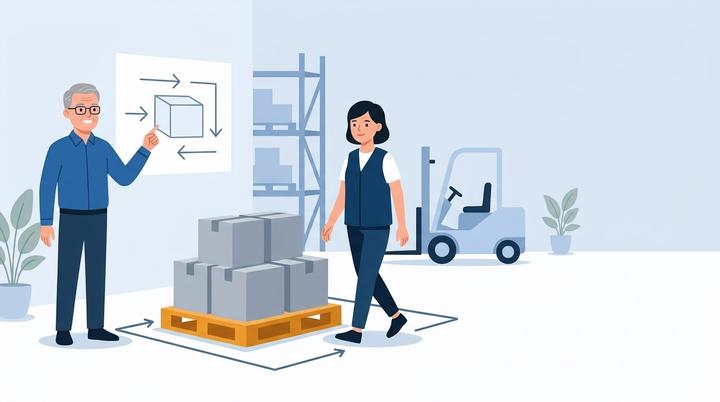
Mara plans a tabletop exercise without a real slipping hazard. One person spots a wet patch in a photograph, another plays the shift supervisor and a third observes using the worksheet. The team should explain the safe response rather than guess the cause. Participants then exchange roles; feedback remains factual.
- The person who spots the hazard stops the affected activity and warns others.
- The team identifies the local reporting route and secures the area according to site rules.
- The supervisor arranges a safe alternative and assigns investigation of the cause.
- Reopening is explained only after a check by the responsible person; unresolved issues are handed over.
The observer marks each outcome as demonstrated, partly demonstrated or outstanding and notes one improvement. If the reporting route is missing, the team clarifies it and repeats the exercise. Our guide to learning assessment gives further examples for choosing appropriate questions and exercises.
Reach every shift and check understanding
Mara agrees with the other supervisors which tasks use the same route and who will deliver instruction. Absent employees are scheduled for a later session; meanwhile the established safeguards apply to everyone. Temporary and contractor staff using the area must also be included in coordination. The parties clarify who is responsible for each part before delivery.
Rather than merely asking whether everyone understood, Mara asks people to show the reporting route and explain what to do when a passage is closed. Where language may be a barrier, plain language, appropriate translation and practical demonstration help. Our guide to multilingual safety instruction shows how to check understanding without embarrassing employees.
Record attendance and effectiveness separately
For the instruction record, Mara notes the date, subject, content, instructor and participants. She records the exercise outcome and outstanding make-up sessions. Attendance does not, however, prove that the pipe was repaired or the passage is permanently safe. She therefore keeps a separate action list with an owner, deadline and verification result.
At the next inspection, the responsible person checks whether the technical fix works and employees know the agreed reporting route. If moisture returns, the safeguard is reviewed and adapted as needed. Digital training modules can support preparation and documentation; the actual local situation and practical instruction remain essential. ConformBase provides an overview in its course previews.
Official sources
ConformBase
Turn knowledge into training that works.
Bring compliance, privacy and security awareness into a format your people want to complete, with certificates and audit-ready evidence.
Start free trialAsk about custom courses →