Fire safety and evacuation drills: A warehouse prepares
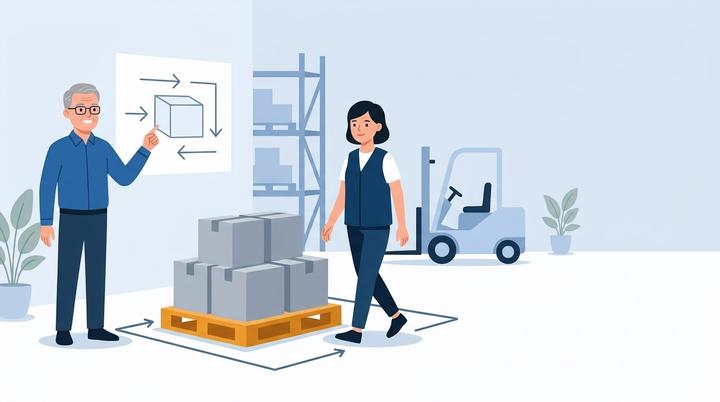
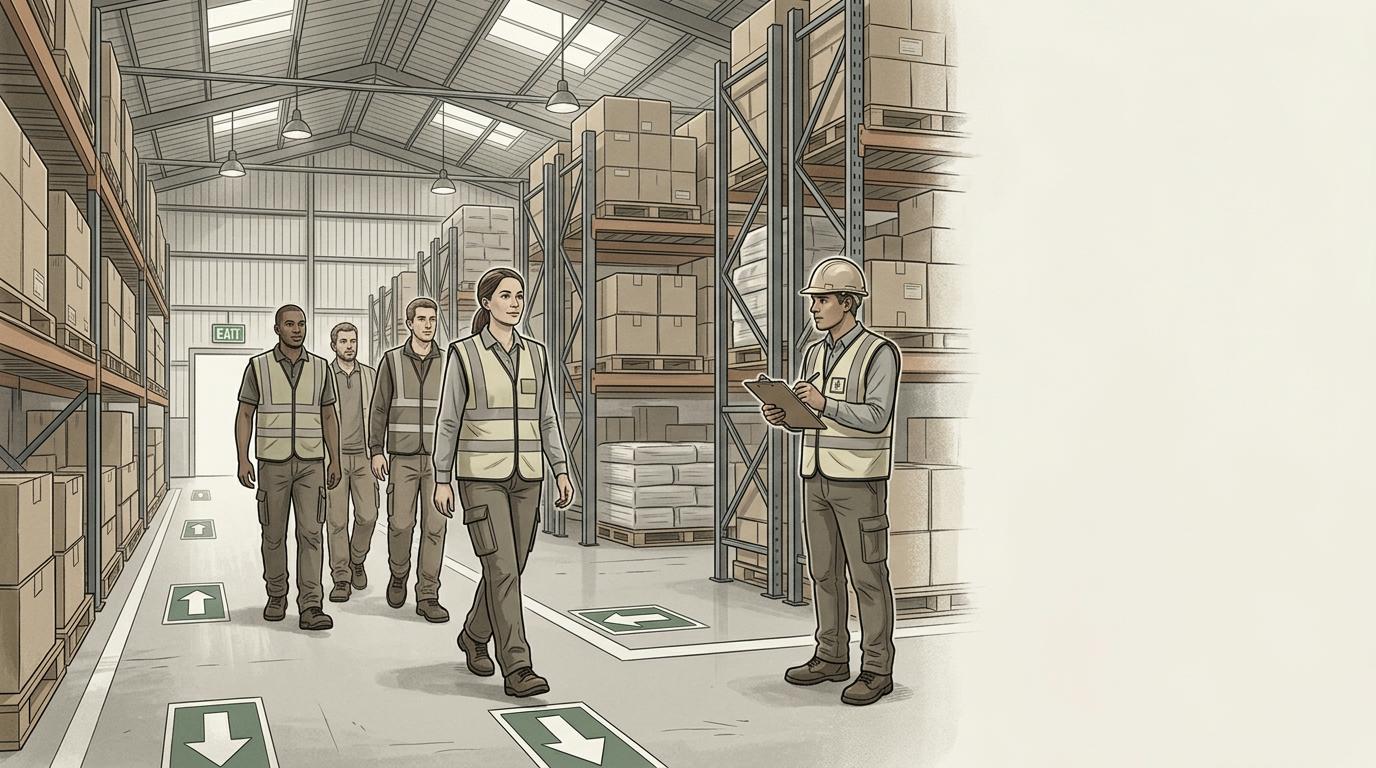
At a warehouse, safety coordinator Lea is preparing a fire evacuation drill for early and late shifts. It is unclear who approaches visitors and who reports that an area has been checked. Lea wants to know whether the alert reaches everyone, roles work and the drill lead receives reliable information. This scenario is fictional.
Check the legal framework
Under section 10 of Germany's Occupational Safety and Health Act, employers must take necessary firefighting and evacuation measures appropriate to the workplace, activity and workforce, considering other people present. They must appoint employees to these tasks and consult the works or staff council before appointment. Numbers, training and equipment must be appropriate.
ASR A2.3 provides for regular drills where an escape and rescue plan is required. It identifies two to five years as established practice, not a universal fixed deadline. Other applicable rules must be considered when setting the interval.
Agree roles and boundaries
Management is responsible for organisation. Lea coordinates and a deputy stands in if necessary. Area contacts guide people outside and report observations. One person receives reports at the assembly point and another records deviations. Nobody should put themselves at risk when checking. Agree suitable arrangements in advance for visitors, contractors and people needing assistance.
Check alerts and routes
Lea checks how to trigger the drill alert and who must be notified beforehand to prevent an unintended emergency response. A real emergency takes priority: stop the drill and follow the actual emergency procedure. Do not physically block escape routes. Discuss a hypothetical failure only as a safe scenario.
Prepare a reporting sheet
Record date, area, responsible person and deputy, whether the alert was received, route used, observations and report recipient. For each deviation, add action, owner, deadline and verification result. An area reported as checked covers only what was safely inspected. Never turn 'not checked' or 'status unknown' into an all-clear.
Practise and reconcile reports
Before starting, Lea briefs observers on roles and the stop procedure. After the signal, participants leave by safe routes and go to the designated assembly point. Area contacts report only what they know. The drill lead reconciles received and missing reports. Do not claim an unaccounted-for person remains inside without confirmation; follow the workplace emergency procedure.
Review and practise again
Lea collects observations without blame: where was the alert missed? Which report was missing? Could everyone use the route? She assigns each action to an owner and deadline and later checks effectiveness. At the next training session, teams practise reporting an incompletely checked area. The area, observation, unknown status and recipient must be clear. Attendance alone does not replace feedback.
ConformBase
Turn knowledge into training that works.
Bring compliance, privacy and security awareness into a format your people want to complete, with certificates and audit-ready evidence.
Start free trialAsk about custom courses →Won through a public tender: AI literacy for DIW Berlin, from kick‑off to sign‑off in one month.