PPE instruction: a new warehouse task
Mira is asked to inspect damaged outer packaging in a warehouse. Her supervisor identifies possible cuts while handling certain packages and potential splashes elsewhere. PPE instruction cannot start and end with handing out any glove: the employer must first assess the actual task and hazards and decide on suitable measures. This fictional case concerns workplaces in Germany.
The team first considers whether the hazardous task can be avoided or made safer through technical and organisational measures. PPE complements the chosen measures rather than legitimising an unsafe process. If contents are unknown, Mira does not open the package or experiment: she stops and uses the reporting route. The supervisor ensures that the route is known across shifts and that a contact is available. The team discusses how to recognise an unresolved case and where to wait safely for a decision.
Clarify the hazard before choosing a product
The supervisor maps the actual steps with employees and the occupational safety specialist: inspect the package, move to a safe location, use suitable tools and report deviations. Cuts and chemical splashes require different assessments. Selection considers material, contact, duration, manufacturer information and, where applicable, the safety data sheet. A glove suitable for one hazard is not automatically suitable for another. Apparently similar tasks may create different demands: a short visual check is not the same as handling a leaking container. While the contents remain unknown, the team does not improvise a product choice.
Section 2 of the German PPE Use Ordinance requires, among other things, protection against the relevant hazard, suitability for workplace conditions and consideration of ergonomic and health needs. Equipment must fit the individual. When items are worn together, they must be coordinated so their protective effects are not impaired. The responsible person checks whether safety glasses and other equipment fit safely together.
 AI-generated
Record responsibilities and selection
The employer is responsible for selection and provision, using specialist expertise and employee experience. The supervisor specifies the approved items for each task and where Mira obtains them. A shopping list alone is insufficient: sizes, compatibility, replacement, storage and accessible spare equipment must be settled. If an item does not fit, Mira reports it instead of modifying it and risking its protective function. The supervisor also checks that purchased equipment matches the approved version and that instructions are available. When a supplier or product changes, suitability is reviewed before use. Feedback about pressure points, restricted vision or difficulty gripping can reveal that the intended combination does not work in practice.
The guide to roles and questions helps assign ownership and hand over unresolved decisions. If new work equipment introduces different hazards, review the selection against the actual task. The example of changes to work equipment shows how to discuss such changes with the team.
Use equipment safely before starting work
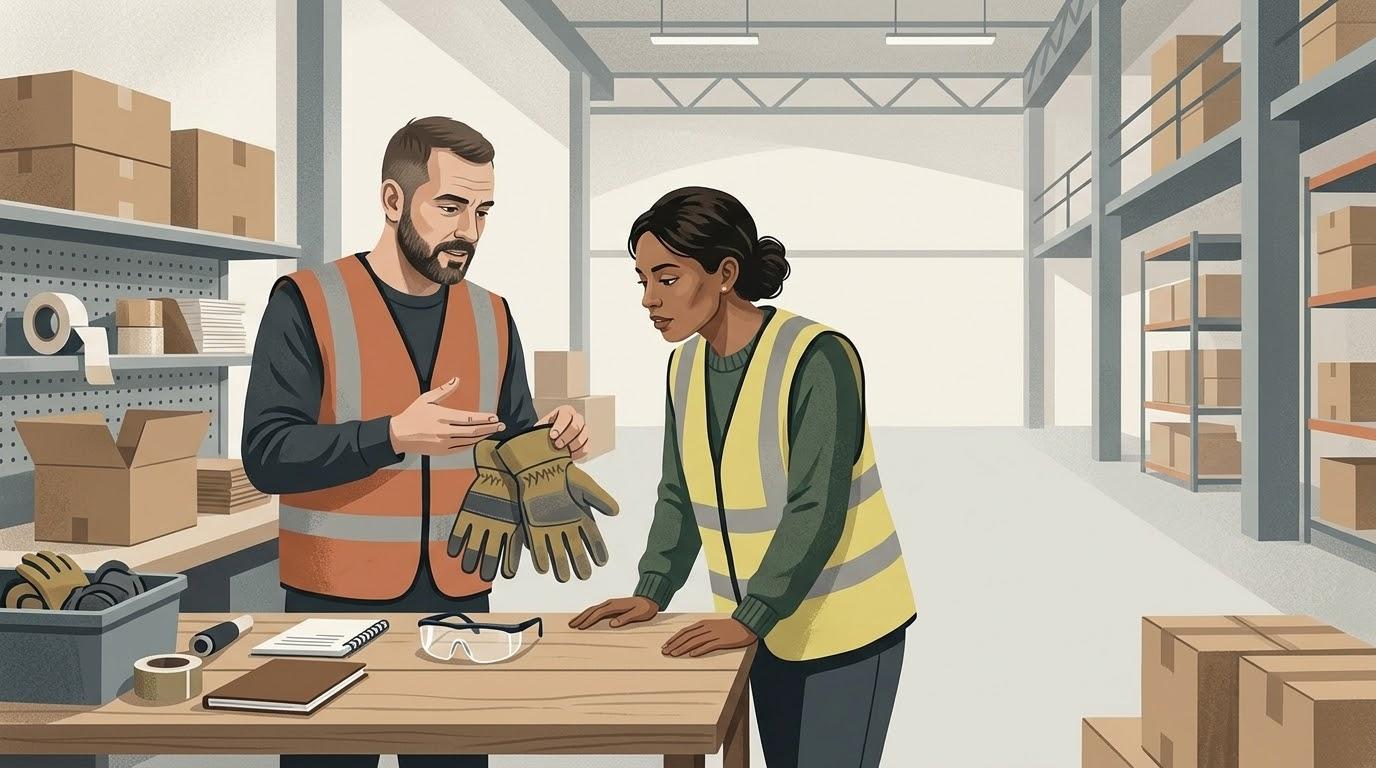
Using an appropriate sample, the instructor shows which equipment the employer has approved for the specific task. Mira checks its condition in line with manufacturer and workplace instructions, puts it on and explains its limits. She learns when to remove damaged or unsuitable equipment from use, how to obtain a replacement and whom to contact. For contamination, established safe procedures apply; generic online advice does not replace substance-specific instructions. The demonstration also covers safe removal and storage. Rather than merely asking whether everything was understood, the instructor asks Mira to explain the sequence and demonstrate it with a clean sample. This exposes uncertain steps before they occur during work.
Section 3 of the PPE Use Ordinance requires the employer to instruct employees in safe use and provide training where necessary. Required information for each item must be available in an understandable form and language. Section 12 of the Occupational Safety and Health Act addresses workplace-specific instruction during working time and adaptation to changing hazards. Other applicable rules, including any special practical-exercise requirements, must be checked separately for the equipment concerned.
A decision sheet for the workplace
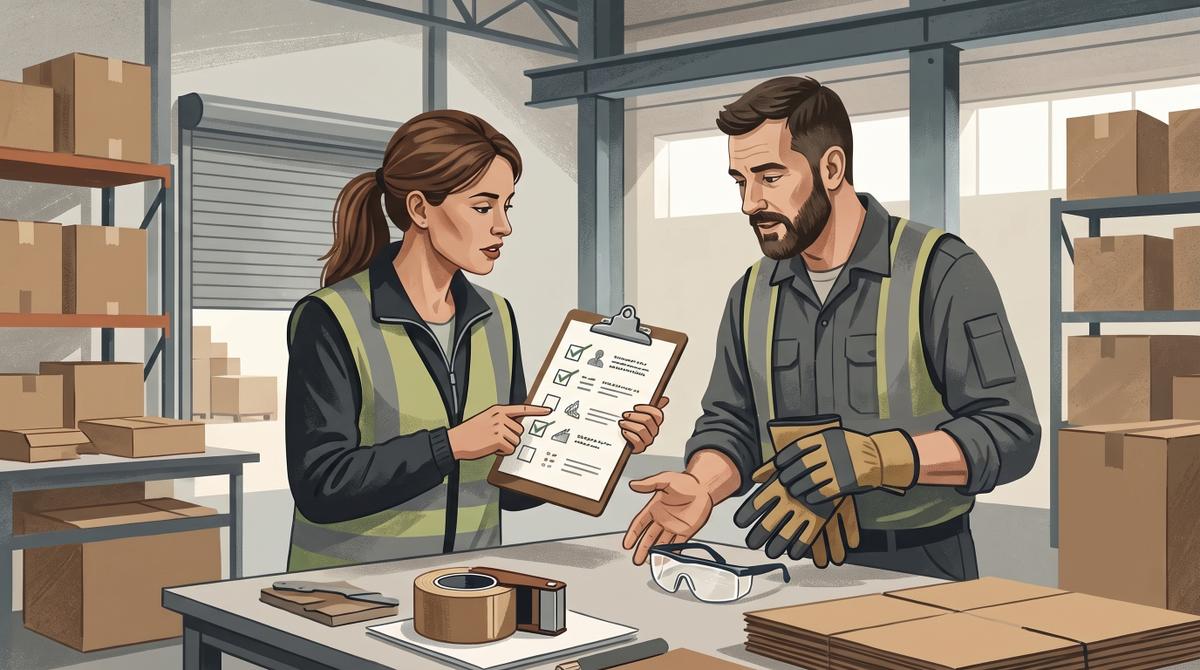
A single sheet connects selection, instruction and follow-up without replacing the risk assessment. The supervisor completes it with the safety specialist and affected employees. The following fields are a practical suggestion, not a legally prescribed form:
- Task, workplace and specific hazard.
- Higher-priority measures and remaining hazard.
- Approved equipment, size, combinations and limitations.
- Inspection, donning, removal, storage and replacement under applicable instructions.
- Instructor, participants, exercise and outcome.
- Open questions, owner, target date and follow-up.
For Mira, record for example which gloves are approved for handling a defined package. For unknown contents, explicitly state: stop, keep the distance specified in workplace instructions and contact the responsible person. An unresolved suitability question stays visible until the responsible role answers it; a signature does not close it. Keep the sheet where the supervisor can retrieve it when conditions change. Identify the product version and relevant manufacturer instructions so a substitute can see what has been decided and what still needs specialist input. A new packaging type or changed task calls for fresh assessment rather than blindly transferring the old decision.
A safe exercise with observable results
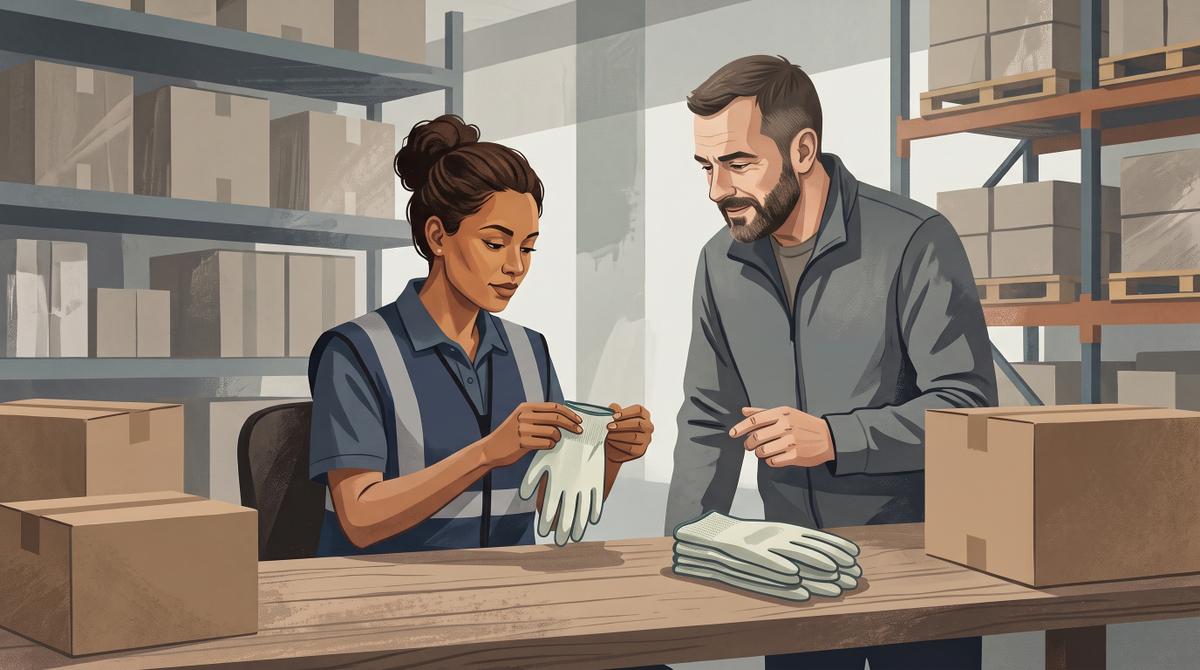
The supervisor and instructor prepare a safe practice area. A clean empty sample and picture cards represent the scenario; real hazardous substances, sharp edges and damaged work equipment are not deliberately introduced. Agree a stop signal, exercise boundaries and reporting route beforehand. The guide to practical safety exercises explains how tasks, observation and feedback fit together.
 AI-generated
- The instructor presents two scenario cards and equipment approved for one defined case.
- Mira identifies the hazard and explains why she chooses the approved equipment or stops when suitability is unclear.
- She inspects and uses the clean sample under local instructions and names its limits.
- An observer checks four points: hazard recognised, appropriate decision, safe use and correct reporting.
- If a gap appears, the instructor explains the step again and has it safely repeated.
The four observation points are a workplace learning aid, not a statutory score. A damaged item on a picture card calls for reporting, not continued use. If the suitability of real equipment is in doubt, the task is not released until clarified. Fall protection or respiratory protection exercises may require different specialist conditions and must not be replaced by this general example. Feedback is specific and avoids blame: which hazard was identified, what decision was made and which step needs repetition? Record the learning objective as achieved only when Mira can safely explain and demonstrate the critical sequence. An unresolved equipment question becomes a separate action for the responsible role, not merely an alleged employee error.
Follow up, correct and check again
The instructor records the date, topic, participants, equipment covered, exercise outcome and any agreed repeat practice. A real defect receives a separate action with an owner and target date. The supervisor later checks whether replacements are available, the action works and Mira knows the reporting route. Determine mandatory records and intervals from the rules applicable to the specific case. At the next team meeting, review open points: Is the correct model available? Has an unsuitable size been replaced? Does reporting work on the late shift? Follow up answers with the responsible person. Instruction then connects learning to a verifiable workplace improvement rather than remaining an isolated appointment.
The ConformBase course Safe Work in Warehouse and Logistics can prepare general foundations. Add your risk assessment, specific product selection, local instruction and any required specialist exercises. A course replaces neither suitable safeguards nor the employer's responsibility.
Official sources
ConformBase
Turn knowledge into training that works.
Bring compliance, privacy and security awareness into a format your people want to complete, with certificates and audit-ready evidence.
Start free trialAsk about custom courses →