Cleaning staff safety instruction: A new evening assignment
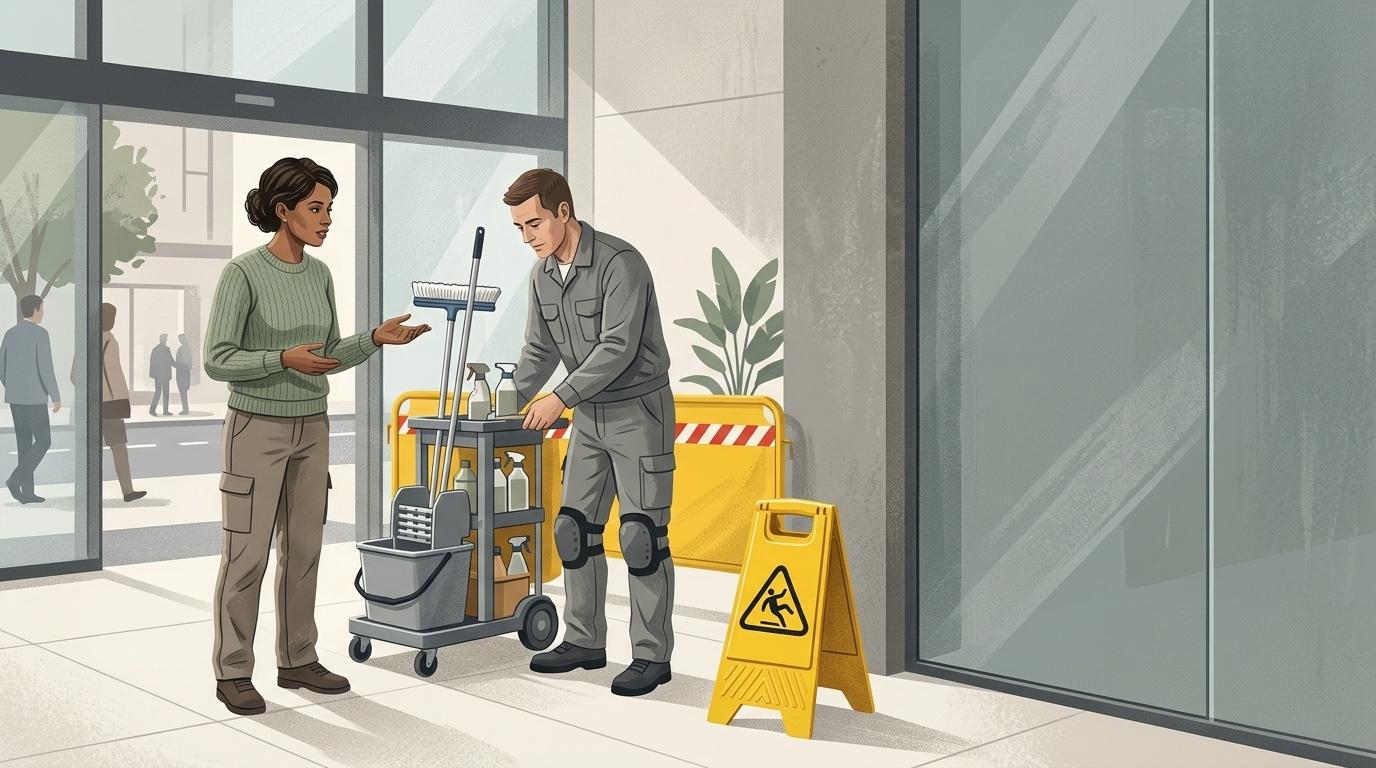
Aylin's cleaning team takes over an office building in the evening. People still use the entrance, floors will be wet cleaned and a new cleaning product is stored in the washroom. The site manager prepares safety instruction for the cleaners. Aylin knows similar work but not the site's reporting route or whether the product is approved. Before work starts, the manager discusses the differences with the client and resolves open points. A general video cannot explain where to restrict access or whom to contact at this building.
Match tasks and hazards to the actual site
The responsible manager reviews the assignment with the team: Which areas are cleaned and when? Where will workers encounter visitors, vehicles or other contractors? Which machines, sockets and routes will they use? Wet floors, electrical equipment, physical strain and skin contact matter differently for different tasks. The employer's risk assessment determines necessary safeguards. Information from the client supplements it but does not replace it.
Section 12 of the German Occupational Safety and Health Act requires instruction before work starts, including on recruitment, changes in duties and introduction of new equipment or technology. It must be adapted to evolving hazards and repeated regularly where necessary. For Aylin's team, the manager determines which site-specific risks need additional discussion before the new assignment. Instruction does not replace protective measures.
 AI-generated
Discuss products and skin protection in practical terms
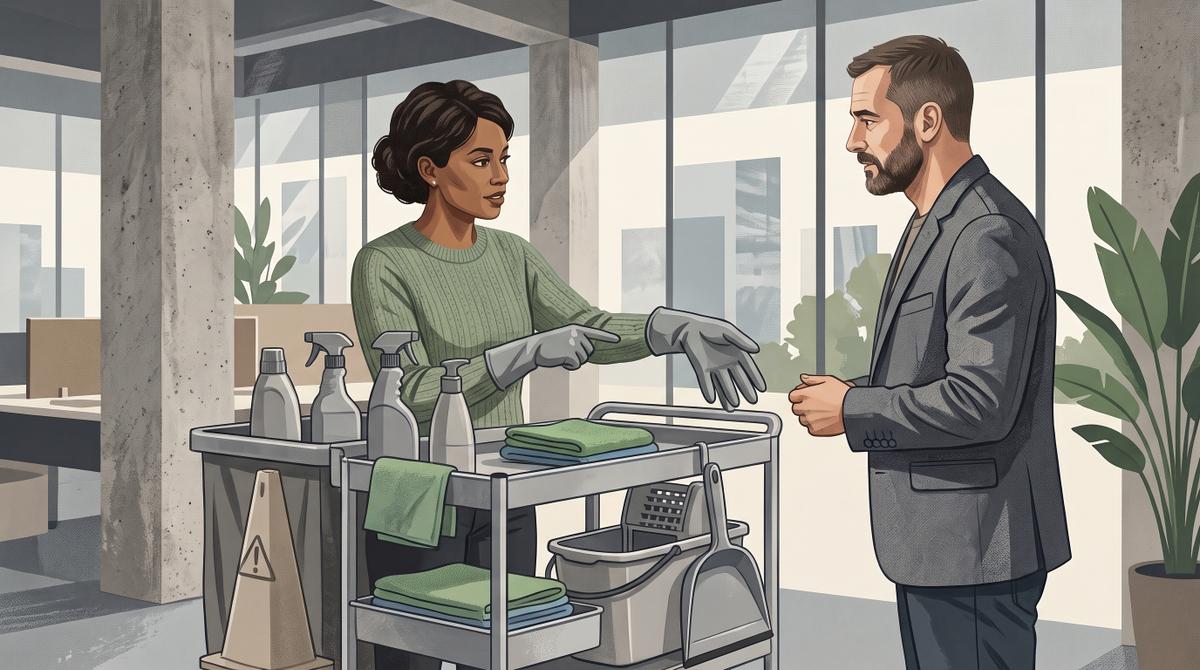
For each approved product, the manager shows the current workplace instructions and explains labelling, use, dilution and safeguards using available product information. Workers do not improvise mixtures or transfer products into unlabelled containers. Suitable gloves depend on the product and task and are determined by the risk assessment. If contents are unknown or instructions are missing, Aylin stops the affected work and asks her manager. Additional rules may apply in washrooms and must be clarified before the assignment.
Organise the site, barriers and handover
At the entrance, the site manager agrees with the client which area can be closed and when, and how people can pass safely. Before starting, the team checks the agreed routes and places warning signs according to workplace procedures. If the area cannot be secured, wet cleaning there does not begin until a safe solution is agreed. For changing sites, the handover also covers access, escape routes, first aid and an available contact.
One assignment sheet for each handover
- Site, date, responsible manager and reachable contact
- Tasks, working hours, affected areas and approved equipment
- Products, current instructions and specified safeguards
- Restricted areas, escape routes, first aid and incident reporting
- Instructed staff, open questions, owner and completion date
The sheet supports the handover but does not replace the risk assessment or the actual discussion. The site manager checks it against current instructions and adds changes before another shift takes over. Assign an owner to unresolved questions and suspend the affected task until resolved.
A safe exercise with a measurable result
The manager prepares a simulation without hazardous products or real public traffic. Aylin plays the cleaner, a colleague plays a person at the entrance and the manager observes. Aylin explains where she would secure the area, which approved product she would select using the instructions and whom she would inform about an unknown container. The outcome is observable when she describes the local barrier procedure, avoids an unknown product and identifies the agreed reporting route. Discuss errors without blame and repeat the exercise if needed.
Follow up understanding and changes
The manager records the reason, content, date, instructor, participants and outstanding actions. Ask workers to explain or demonstrate essential steps and adapt communication to the team. New equipment, products or conditions may require renewed assessment and additional instruction. Feedback from the night shift belongs in the next handover. A signature alone does not show that an unsafe process has been corrected.
ConformBase
Turn knowledge into training that works.
Bring compliance, privacy and security awareness into a format your people want to complete, with certificates and audit-ready evidence.
Start free trialAsk about custom courses →